
Graduate student Ayobami Aiyeolemi.
Pharm Fresh is a series dedicated to spotlighting UT Pharmacy students who are making waves in their practice, accelerating new ways of thinking, building community and sharing their vision for remodeling the landscape of health care and the pharmaceutical sciences.
Meet Ayobami Aiyeolemi, M.S., Ph.D., a graduate student in the Division of Health Outcomes whose passion for community partnership and research is transforming how we think about care for individuals with sickle cell disease, a chronic genetic blood disorder that disproportionately affects Black communities.
Describe yourself in three words.
Curious. Daring. Resilient.
What inspired your passion for addressing stigma and healthcare accessibility for individuals living with sickle cell disease?
My passion stems from the recognition that, despite its profound impact, stigma and access to health care in sickle cell disease remain underaddressed. Through my work, I hope to change that by amplifying patient voices and helping ensure that individuals with sickle cell disease feel respected, understood and empowered in their care.
Was there a turning point during your time at the College of Pharmacy that solidified your path in health outcomes research?
Yes, a pivotal moment came when I was working on a project led by one of my supervisor's former students that explored emergency department experiences among individuals living with sickle cell disease. I'd always been drawn to patient experience research, but hearing people's stories firsthand was transformative. It helped me realize how powerful this work can be in capturing lived realities and bringing them to the center of healthcare conversations. That experience solidified my commitment to health outcomes research and to ensuring that it truly serves the people it's meant to help.
Tell us about your pilot intervention with Dell Med residents for your master's thesis. What was one moment from that project that stands out most?
Individuals with sickle cell disease (SCD) often visit the emergency department for pain management. Research shows that emergency providers frequently lack knowledge of SCD and may hold negative perceptions, which can affect care quality. To address this, I worked with my supervisor, Dr. Jamie Barner, and Dr. Titilope Fasipe, a pediatric hematologist-oncologist, to design an educational intervention aimed at improving provider knowledge and attitudes.
The session, piloted during a Dell Med ED Grand Rounds in April 2024, was an interactive lecture that emphasized the patient perspective, including short audio clips of individuals with SCD narrating their healthcare experiences. What stood out most was how much participants valued those patient voices. It was a powerful reminder that centering lived experiences isn’t just impactful, it’s transformative. The full paper is published in the Journal of Sickle Cell Disease.
Why is it important for the sickle cell disease community to be involved in health outcomes research and how do you aim to make a difference?
Because without their perspectives, research risks missing the mark. As the saying goes: "Nothing about us without us."
In my own work, I've started by incorporating patient voices into educational interventions. Looking ahead, I hope to co-create research alongside individuals with sickle cell disease, shaping questions together, co-developing solutions and ensuring that the outcomes we measure truly reflect what matters most.
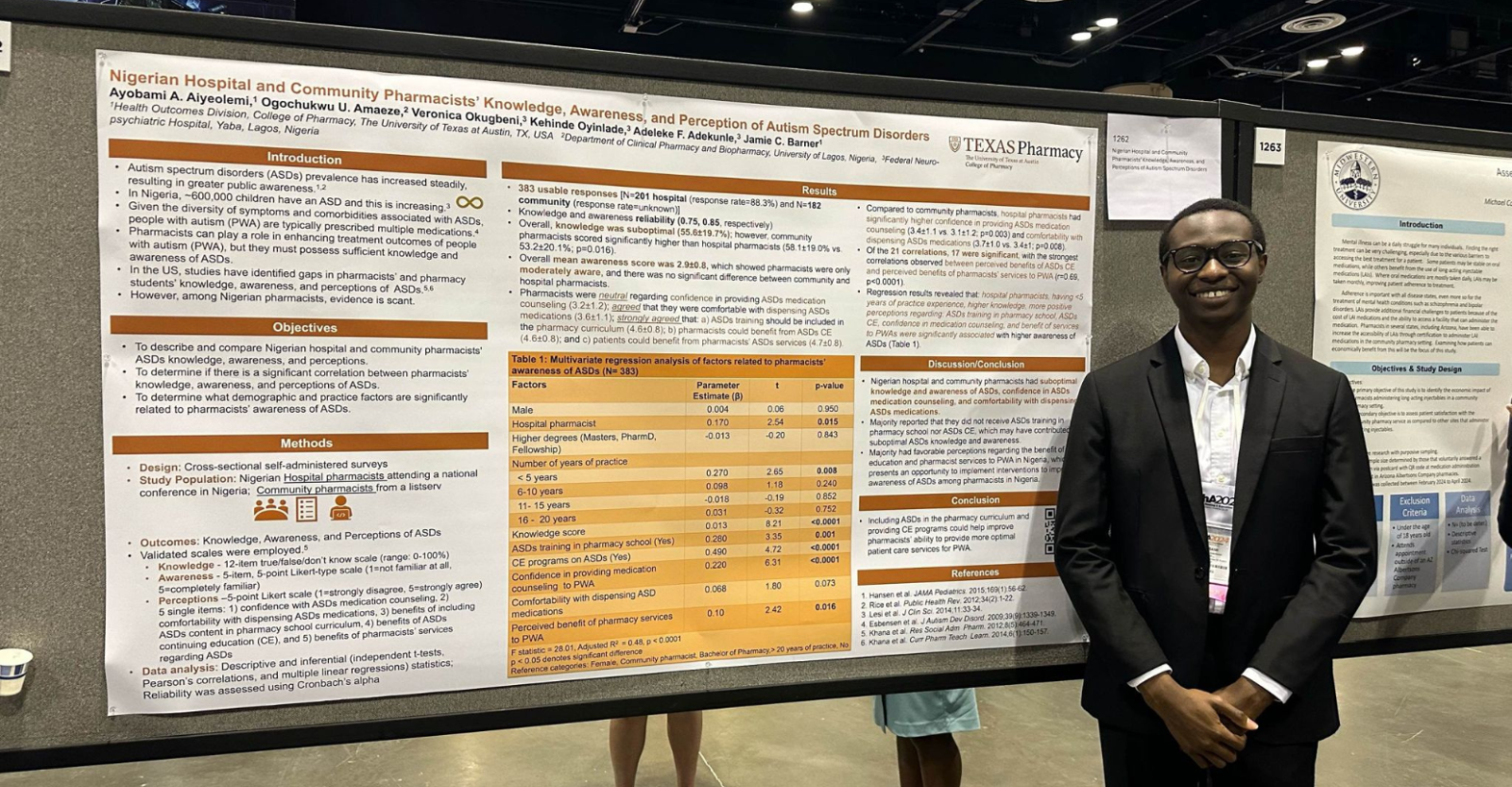
How has serving on the Texas Sickle Cell Action Plan Initiative Policy Committee and volunteering in the community shaped your perspective as both a researcher and mentor?
Serving on the committee has connected me with passionate providers and researchers who are committed to improving care. What I appreciate most is that it's not just about identifying problems, it's about building solutions.
Volunteering in the community has also given me the chance to hear directly from patients and families. These experiences offer insight into what matters most to them and the kind of research they find meaningful. Both roles remind me to keep my work grounded in relevance and rigor and to always prioritize impact.
What does experiential learning look like to you—especially being both researcher and mentor in programs like the LEADER Summer Pathway Program?
To me, experiential learning means growth through doing. Research rarely goes exactly as planned, no matter how well-prepared you are, and those unplanned moments call for creativity, adaptability and reflection. I carried that same mindset into mentoring. The LEADER Summer Pathway Program was my first formal mentoring experience. It gave me the chance to apply what I've learned while also reflecting on how I guide others. With support from my supervisor, I explored my mentoring style, evaluated what worked and adjusted along the way. It was a meaningful experience that helped me grow as both a researcher and a mentor.
Tell us about one person—mentor, community member or peer—who has deeply influenced your journey in pharmacy and research.
My supervising professor, Dr. Jamie Barner, has been one of the most influential people on my journey. When I started the program, I was unsure of my direction, but with her support, I've grown so much. She inspires me to think critically, pursue research that’s rigorous and impactful and trust my instincts. I'm deeply grateful for her mentorship and the example she sets.
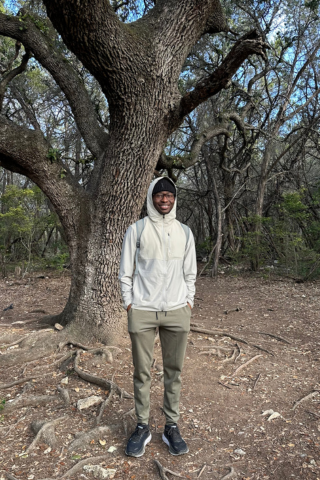
How do you balance your research, leadership and mentorship roles, and what do you do to recharge?
It takes intentional planning. I try to structure my responsibilities so that they complement rather than compete with one another. And I make space for my personal life too, something my supervisor has always encouraged. To recharge, I keep things simple: long walks help me clear my head and reading is my favorite escape.
What advice would you give to other graduate students interested in combining health outcomes research with community advocacy?
Show genuine interest in the community you're working with and look for ways to contribute that go beyond research. Don't just engage when you need something. Volunteer. Listen. Spend time learning what people care about and what they're up against. When you build real relationships, the advocacy comes naturally.
When a future patient or community member reads about your work, what do you hope they feel or understand right away?
I want them to feel seen. I want them to know that their stories matter and that their voice is being heard, valued and reflected in this work.
In one sentence, what does the future of sickle cell care look like to you?
A future where people with sickle cell disease have access to effective treatment and truly equitable, patient-centered care.
This article was written as part of the Spring 2026 edition of Focus—the magazine of the The University of Texas at Austin College of Pharmacy.