Pharmacology & Toxicology

Manganese-Induced Parkinsonism Research Provides Potential Treatment Option

A man wearing a collared shirt and smiling.
June 28, 2024
In a recent article in the Proceedings of the National Academy of Sciences (PNAS), ongoing research into the causes of manganese-induced parkinsonism has revealed a possible treatment option. Dr. Somshuvra Mukhopadhyay and a team of researchers have released new findings that the PHD2 inhibitor, which is the cell’s master oxygen sensor, has a second physiologically essential function – to also act as the cell’s manganese sensor.


Chemistry World: More Than a Mirror-Image: Left-Handed Nucleic Acids

Two double helixes of DNA, one appears normal and the other appears jagged and damaged.
February 20, 2024
The Division of Pharmacology & Toxicology's Karen Vasquez, Ph.D. talked to Chemistry World's Rachel Brazil on genetic instability in disease and evolution of course related to Z-DNA. Dr. Vasquez's research focuses on genome instability, DNA damage and mechanisms of repair.

The Hill: For Thousands Of Common Chemicals, There Is ‘No Safe Level,’ Says Report

Swirling ocean water that it foamed in swirls.
March 1, 2024
The Hill covers a new report headed by Professor of Pharmacology & Toxicology Andrea Gore, Ph.D. that draws attention to the link between plastics, pesticides and forever chemicals and the growing incidence of endocrine-associated disorders over the last two decades.

The Root of the Problem: Warning Consumers About EDCs from the Laboratory Bench

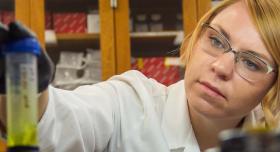
A woman working in the lab in a white coat.
January 10, 2024
Emily Hilz, a postdoctoral researcher in the Gore Lab, was on the cover of the latest issue of Endocrine News. Her research focuses on developing a new mobile app to empower Black women as consumers to reduce EDC exposure risk by linking chemicals in their personal care products with their suspected adverse health outcomes.
Subscribe to Pharmacology & Toxicology